
 Contact-us


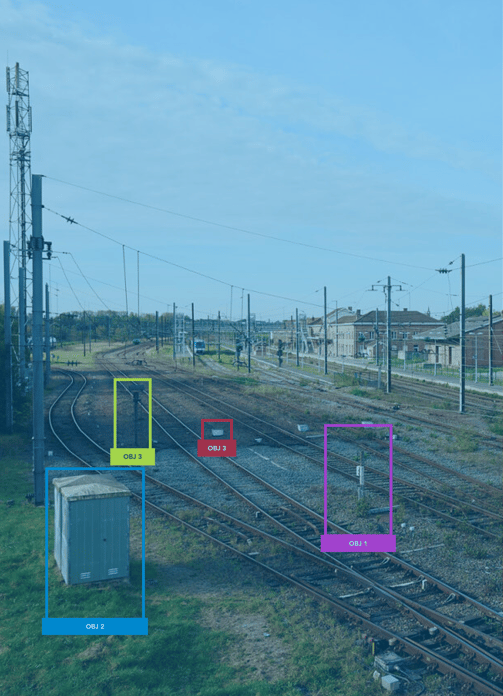
Automate defect detection on trackside telecom assets
The use of a digital twin in this context aims to automate the detection of changes in the condition of these installations by leveraging regularly updated data.
|
Customer needs |
Detection of missing or damaged slabs, cable ducts, trackside phones, and shelters; open hatches; broken fencing; and landslides near the tracks |
|
|
Types of data analyzed |
3D LiDAR images and point clouds |
|
|
Data acquisition method |
Measurement train |
|
|
Method of using the digital twin |
1 |
Creation and training of 3 algorithmic modules for :
|
| 2 |
Point cloud segmentation for data analysis and detection of three-dimensional objects |
|
| 3 |
Evaluation of the detection model's performance (proportion of target objects correctly detected by the model) |
|
|
Benefits for the client |
|
|
.webp?width=44&height=44&name=besoin%20des%20clients%20(1).webp)
.webp?width=33&height=41&name=data%20(1).webp)
.webp?width=51&height=51&name=acquisition%20(1).webp)
.webp?width=47&height=46&name=digital%20twin%20(1).webp)
.webp?width=45&height=45&name=benefit%20(1).webp)
|
What is LiDAR ? |
|
LiDAR, which stands for "Light Detection and Ranging" or "Laser Imaging Detection and Ranging," is a distance measurement technique based on the analysis of the properties of a light beam returned to its emitter. A LiDAR system is an optoelectronic device consisting of a laser emitter, a receiver with a light collector (such as a telescope or other optics), and a photodetector that converts light into an electrical signal. It also includes an electronic signal processing chain that extracts the desired information. LiDAR data collected forms a three-dimensional point cloud with up to 7,000 points per square meter, providing a highly detailed and precise level of information. |

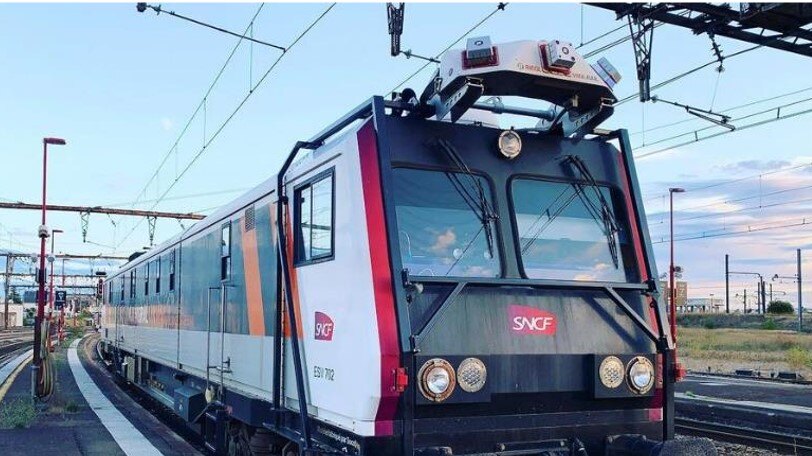
What is a Track Inspection Vehicle (TIV) ?